
Sex Offender Checks in Bell County
The Texas Public Sex Offender Registry is the main public source for a Bell County sex offender search. The Texas Department of Public Safety, or DPS, publishes the statewide database. Local police departments register and verify people who live inside their cities. The Bell County Sheriff's Department fills that role for residents outside a municipality. That split matters because DPS publishes the searchable record while the local authority receives changes and checks compliance.
Start with a name when checking a known person. Use an address, city, ZIP code, county filter, or map when the question concerns a place. A name match is only a candidate. Compare aliases, photograph, date of birth or age, height, weight, and other descriptors before treating it as the same person. Geographic results also require care. A registered address reflects information reported to an authority, not a promise that a person is at that spot now.
Bell County Registry Map Views
The official DPS registry map and list interface serves two different needs. Map view helps a reader study an area around a Bell County address. List view makes names and entries easier to compare. Zoom level, page limits, and the selected search radius may change which results appear, so a blank view should not be read as proof that no registrant is associated with the wider area.
The registry image below comes from the DPS public map. It shows why place-based results should be checked against the result list and full profiles.
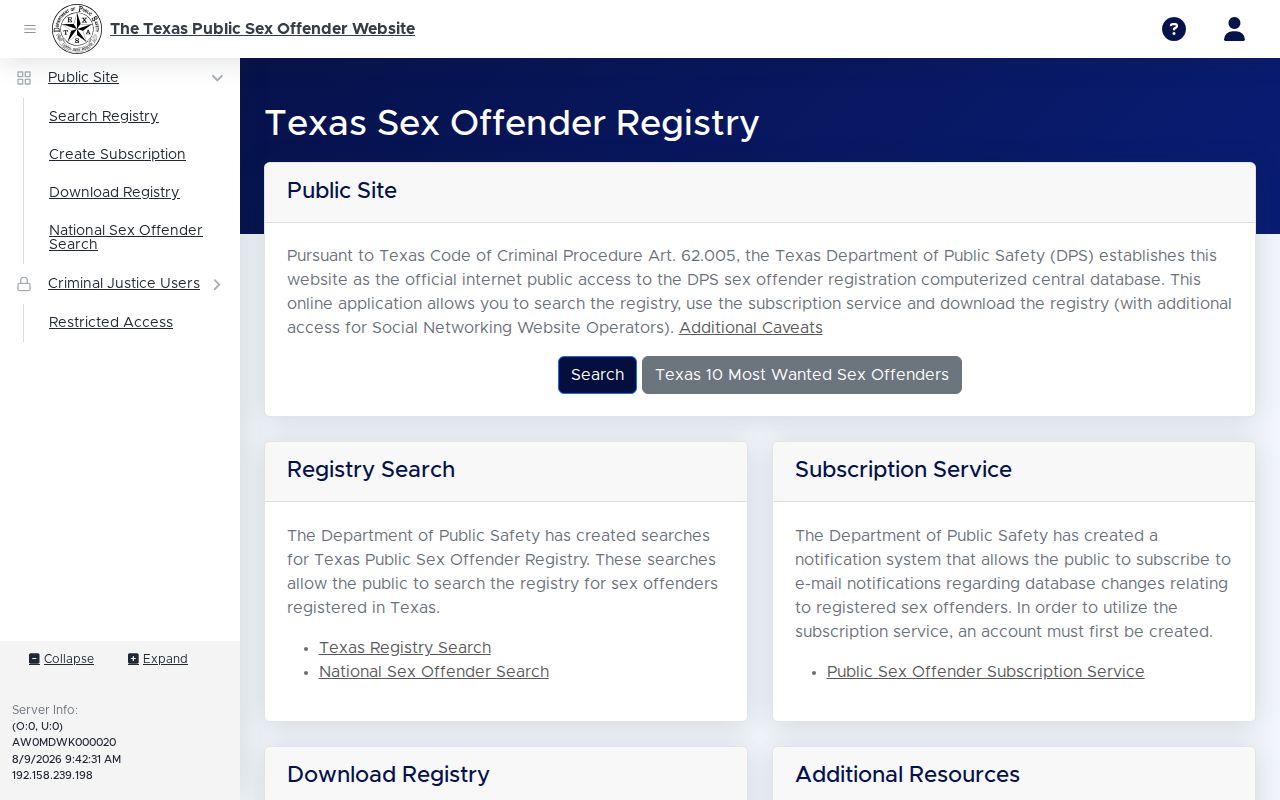
Switching views can answer a second question without relying on a single pin. Re-run a Bell County search by name when a map result needs identity-level review.
How to Search the Texas Public Sex Offender Registry
DPS manages the Texas Public Sex Offender Registry under Code of Criminal Procedure Chapter 62. The interface supports name and geographic paths. If an old bookmark fails, enter through the DPS registry program page and follow its current search link.
- Open the official DPS search and read its conditions.
- Choose a name search or enter a Bell County location.
- Compare the result list with known identity details.
- Open the profile and review status, offense, authority, and last verification.
| Field Label | Type | Required | Notes |
|---|---|---|---|
| Last Name | Text | Conditional | Begin with exact spelling, then broaden. |
| First / Middle Name | Text | No | Useful for narrowing common names. |
| Address / City / ZIP | Text or select | Conditional | Sets the geographic starting point. |
| County | Select | No | Select Bell for county results. |
| Radius / Map / List | View controls | No | Options and distances depend on the current interface. |
Bell County and DPS Registry Roles
Bell County registration is local, but the public database is statewide. A person living in Killeen, Temple, Belton, Harker Heights, Nolanville, or another municipality with a police department ordinarily reports to that city's registration authority. Someone outside a municipality reports through the Bell County Sheriff's Department. The local authority verifies and maintains the registration, then sends the data to DPS.
The DPS registration program explanation illustrates that chain. The image below presents the official program source rather than a private list.
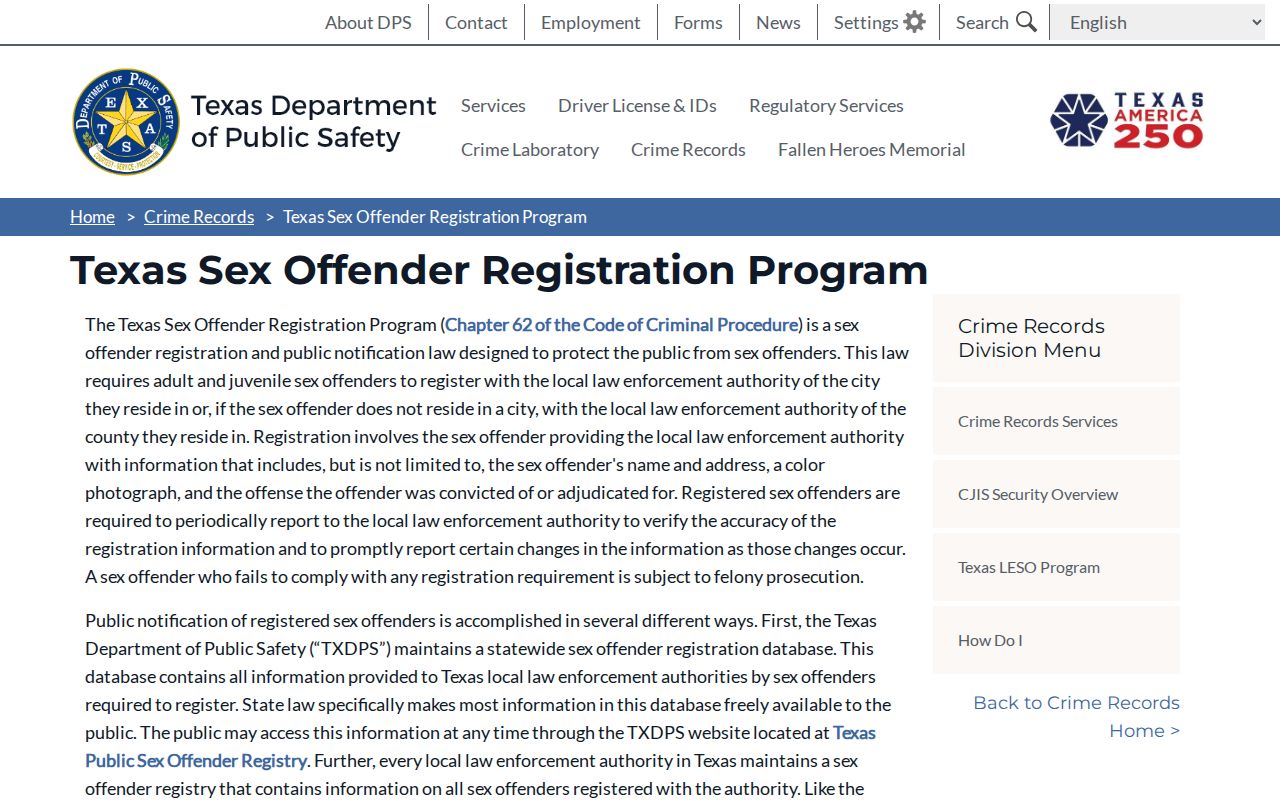
This division of work tells a reader where to report a problem. Search or program questions can go to DPS. A suspected wrong address or compliance issue should go to the profile's registration authority, without approaching the listed person.
Inside a Registry Profile
A Texas profile combines identifiers, registration facts, and the underlying reportable offense. It may show a photograph, aliases, physical traits, public residence information, vehicle details, offense description, conviction or adjudication data, risk level, status, and the last verification or update. The profile should be read as a dated official record, not as a real-time account of movement or conduct.
| Name and aliases | Names tied to the registry entry and any listed alternate identities. |
|---|---|
| Photo and description | Image, age or birth date, sex, race, height, weight, hair, eyes, and marks where shown. |
| Registered address | Public residence and map data reported through the local authority. |
| Offense and court | Description, statute or equivalent, date, court, jurisdiction, and permitted victim category. |
| Risk and term | Texas risk level plus an end date or lifetime indicator where displayed. |
| Status and verification | Compliance or other status, registering authority, and latest verification or update. |
Bell County Profile Privacy Limits
The public registry does not display every item held by law enforcement. DPS withholds Social Security and driver's-license numbers, telephone numbers, online identifiers, protected employer details, supplemental DPS information, and facts that identify a victim. Those limits reduce misuse while preserving the details Chapter 62 makes public.
The official DPS registry FAQ is the source for these boundaries. Its captured page appears below.
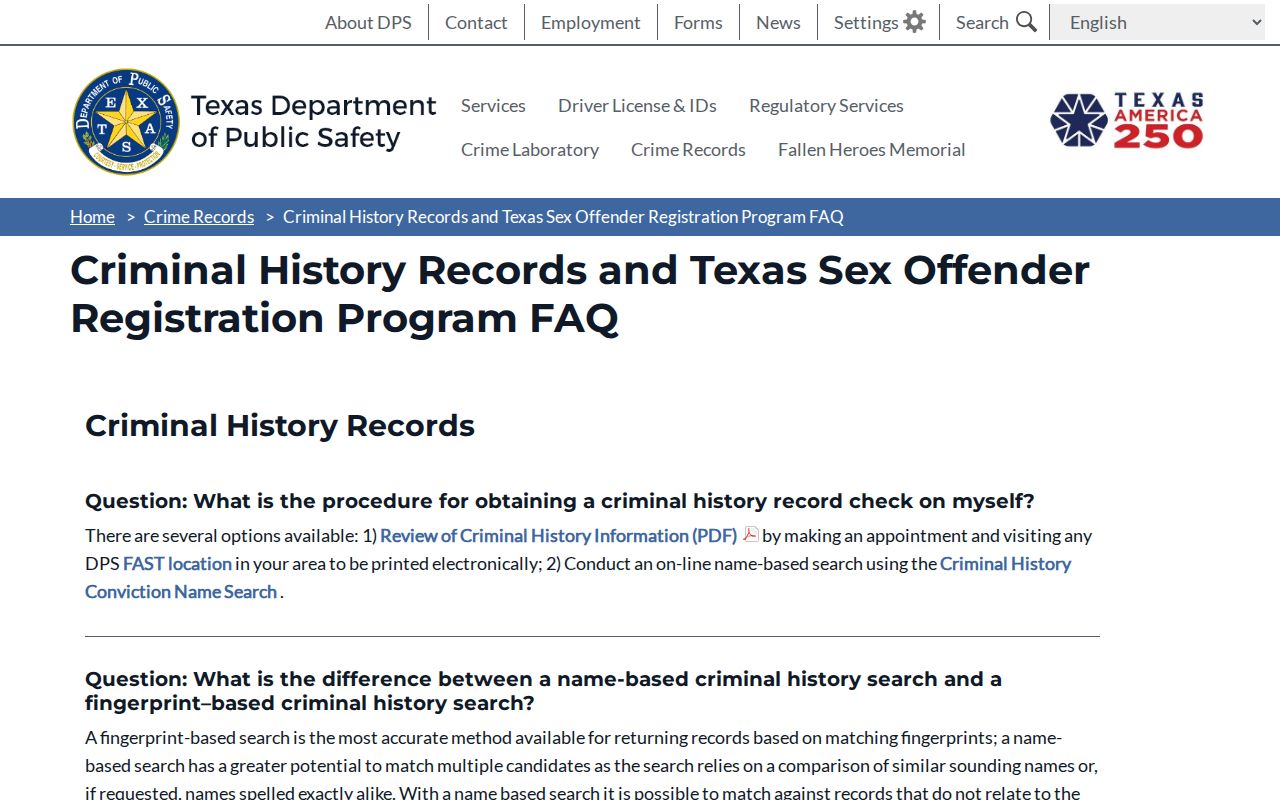
A missing private field is not a defective Bell County profile. It may be information the local registration authority collects but the law does not allow DPS to publish.
Texas Registration Levels and Requirements
Texas uses risk levels, but registration length is driven mainly by the offense and Chapter 62. Risk Level 1, 2, or 3 should not be relabeled as a federal tier. Nor does a higher or lower risk label, by itself, supply the registration end date. Some covered offenses require registration for ten years after the statutory release, discharge, or supervision event. Other categories require lifetime registration.
| Texas concept | Duration | Verification |
|---|---|---|
| Risk Level 1, low | Ten years or lifetime as Chapter 62 assigns | Usually annual, subject to statutory category |
| Risk Level 2, moderate | Ten years or lifetime as Chapter 62 assigns | Usually annual, subject to statutory category |
| Risk Level 3, high | Ten years or lifetime as Chapter 62 assigns | Annual or more often when statute requires |
| Two or more sexually violent offenses | Controlled by the offense table | Every 90 days |
Bell County Risk and Duration
A common mistake is to treat risk, duration, and verification as one scale. They are separate. Risk describes the assessment of danger and likelihood of continued criminal sexual conduct. Duration comes from the reportable offense rules. Verification frequency can change for a person with two or more sexually violent offenses or another statutory category.
The linked Texas registration statute controls those duties. This image preserves the official Chapter 62 source used for Bell County registry interpretation.
Read the profile's end-date or lifetime field instead of estimating from the risk label. A status and verification date also deserve separate review.
Bell County and National Searches
The Texas registry gives the best Texas detail. The National Sex Offender Public Website, or NSOPW, federates participating jurisdictions and helps when a safety question crosses state lines. It supplements the DPS source; it does not replace the Texas profile for Bell County addresses, status, or local registration authority.
The national search image below comes from the U.S. Department of Justice service. It represents the correct cross-state layer for a Bell County search.
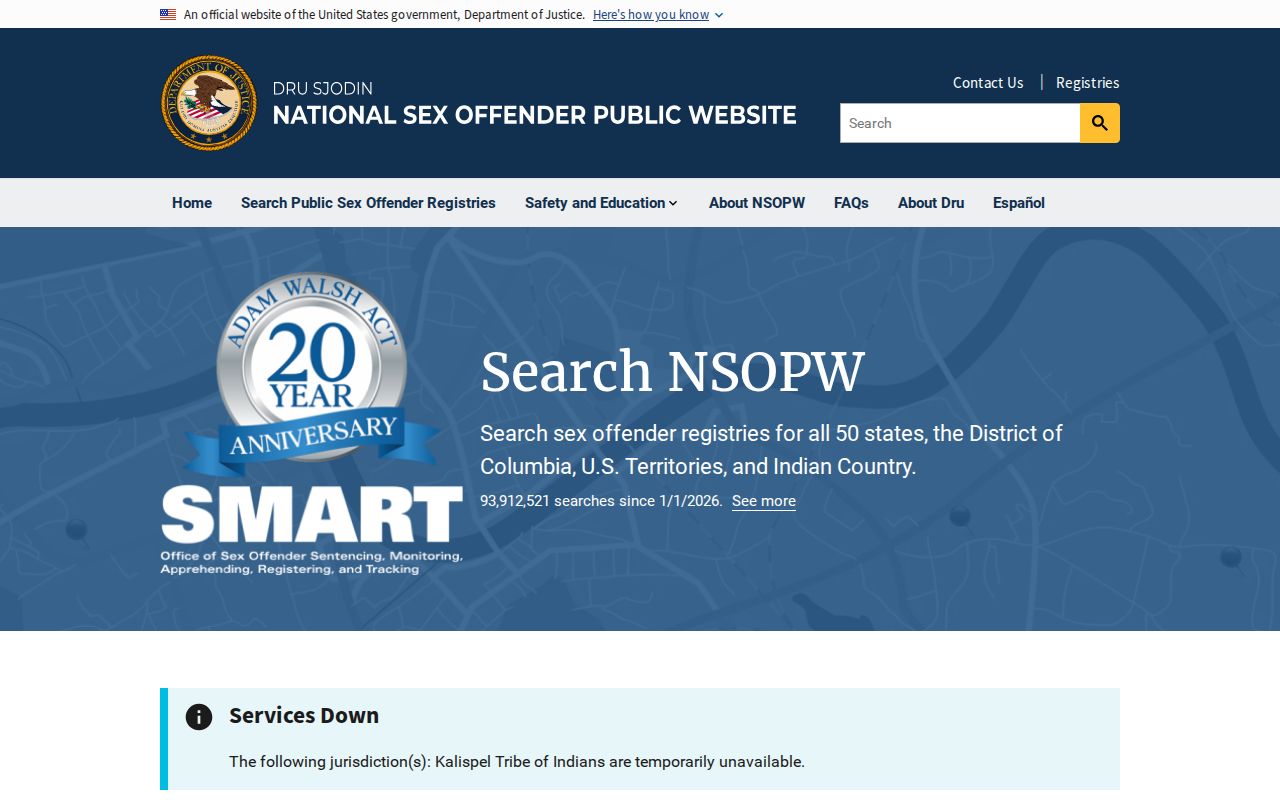
When the two systems appear to differ, check timestamps and open the Texas entry. Then ask DPS or the listed local authority about the specific discrepancy.
Bell County DPS Mobile Search
The official Texas DPS mobile application advertises registry searches by location, name, route, and proximity. It can help with location awareness while traveling through Bell County. It is a DPS tool, not a Bell County Sheriff app, and its proximity view should not be treated as live tracking.
The captured official registry search below shows the same public-service context. It does not reproduce or center any registrant's identity.
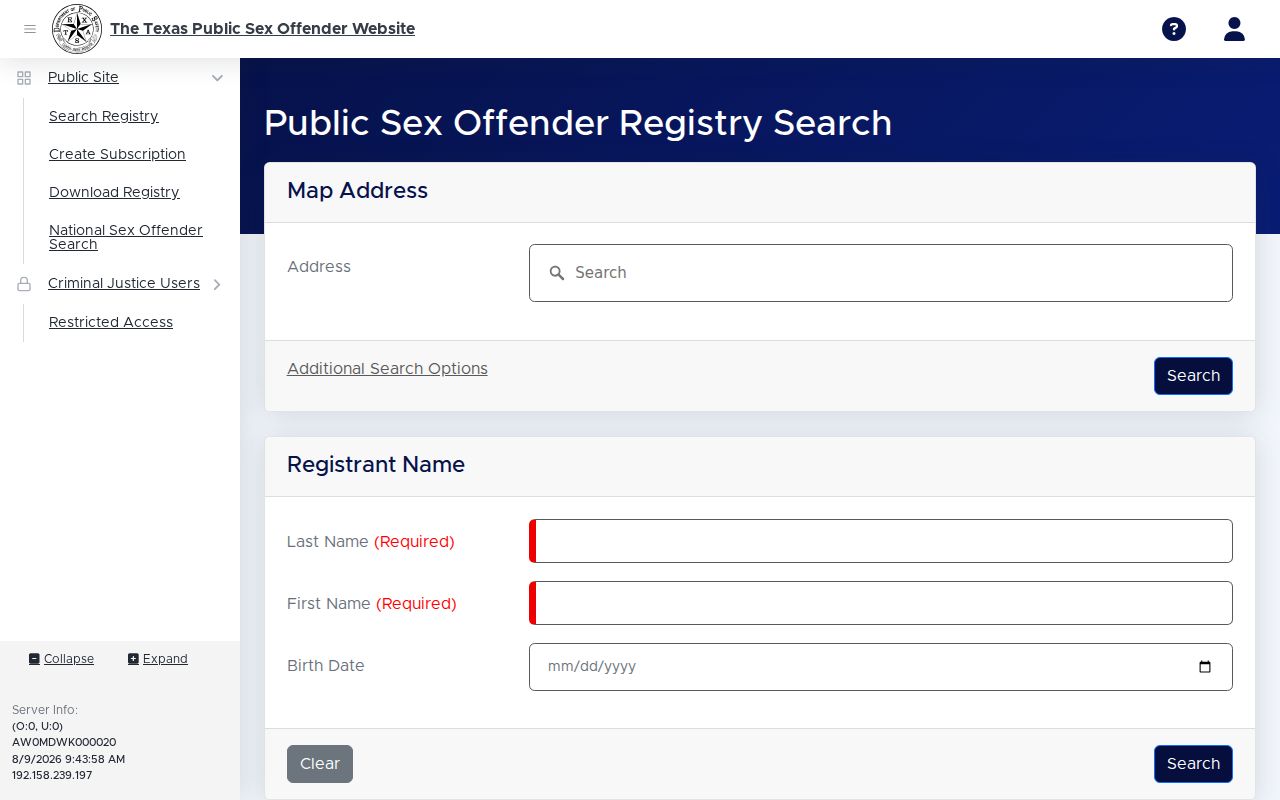
Confirm any mobile result by opening the full profile. Check the status, last verification, authority, photo, and descriptors before acting on the information.
Community Notification and Lawful Use
Texas uses the public database, local publication where permitted, school notice when required, and targeted postcard notice. DPS says postcards go to homes and businesses when a high-risk registrant or a civilly committed sexually violent predator moves into a community. That does not mean every move produces a postcard. Bell County residents can check the current public registry rather than wait for mail.
If a Bell County map pin or profile seems wrong, note the registry identifier, discrepancy, date, and observed facts. Contact the responsible city police department or the Bell County Sheriff's Department. Do not confront anyone. DPS accepts registry data questions at TxSOR@dps.texas.gov or (512) 424-2800.
Misuse is a crime: Chapter 62 registry information is for public safety. Do not threaten, harass, intimidate, trespass, discriminate unlawfully, or take enforcement into private hands.